
Introducing Shiraz University of Medical Sciences and Health Services
Shiraz University of Medical Sciences and Health Services is one of the country's largest medical universities. With 17 schools, more than 11,000 students, approximately 1,000 faculty members, 60 research centers, 68 hospitals, and 34 health and treatment networks, it provides educational, clinical, and healthcare services to more than 4 million people in Fars Province.
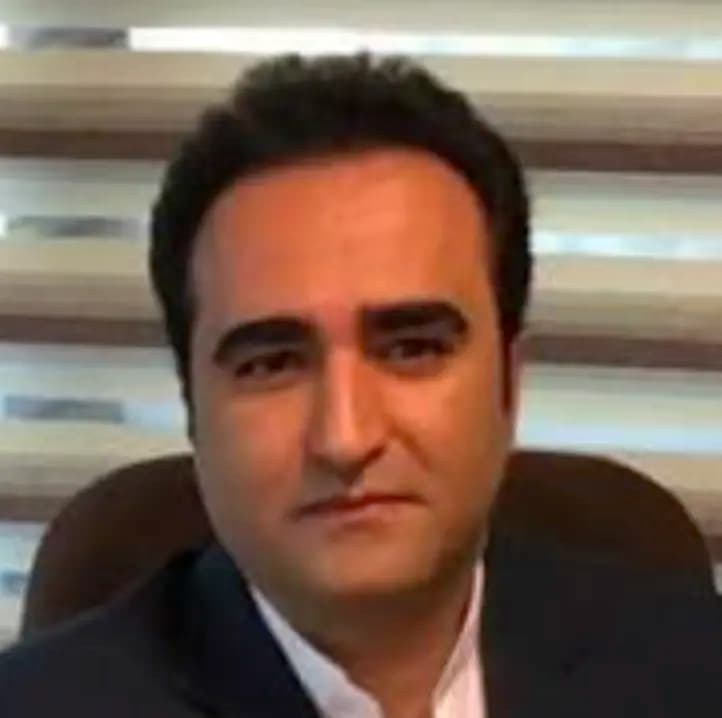
In this conversation, Seyed Fakhreddin Dabiri, Head of the Administrative Transformation and Citizens' Rights Protection Group at Shiraz University of Medical Sciences, discusses the university's experience with Raychat and its impact on responding to visitors.
Challenges and the situation before RaychatWhat was your main goal in seeking a new solution?
The high volume of in-person visits and phone calls for answers to general questions was one of the university's most significant challenges. Many people had to visit in person to ask simple questions or found the phone lines constantly busy.
In addition to frustrating the public, this placed considerable pressure on the teams responsible for responding, with no way to assess the quality of their service.

Our biggest problem was that we did not know how satisfied our visitors were. There were too many in-person visits for routine questions, the phone lines were constantly busy, and we needed a way to answer people's questions faster and more easily.
The university's main goals in choosing a new solution were:
- Reduce in-person visits
- Reduce traffic caused by those visits
- Increase visitor satisfaction
- Enable measurement and evaluation of the teams responsible for responding
Why Raychat?What factors led you to choose Raychat to solve these problems?
After evaluating several online conversation solutions, the university chose Raychat for its straightforward setup, ease of use, and conversation-management capabilities.
One important advantage for the organization was the ability to standardize answers to frequently asked questions while still allowing each department to manage its own specific responses.
The simple interface also meant agents could be trained quickly and teams could use the platform without unnecessary complexity.
The experience of using Raychat
Raychat was deployed at the university quickly and without complexity. As Mr. Dabiri explains: “Installing and setting up Raychat was very simple and straightforward, and its interface is highly user-friendly for both users and agents.”
Today, departments across the university use Raychat to respond to visitors, patients, students, and applicants for healthcare services.
The capabilities that have delivered the greatest value to the university include:
- Centralized conversation management
- Measuring user satisfaction
- Measuring agent response times
- Customizable automated responses
- Fast support and close assistance from the Raychat team
Responding even outside working hoursWhich features or capabilities have created the most value for you?
Raychat's automation features—particularly the response bot and intelligent automation—allow us to answer questions from users and visitors to the Shiraz University of Medical Sciences website outside working hours, even when no agents are online, without having to worry about unanswered requests.
Results
Raychat has enabled the university to answer a significant share of visitors' questions without requiring an in-person visit.
During the period reviewed, between 2,000 and 3,000 conversations take place through Raychat. This has played an important role in reducing in-person visits and making response services more accessible to the public.
In addition, the data recorded in the platform helps university managers evaluate the performance of different departments and hospitals based on response levels and the volume of requests received.
Looking ahead
Shiraz University of Medical Sciences believes Raychat has addressed most of the organization's needs, while expecting its reporting and data-analysis capabilities to continue developing in line with the requirements of large organizations.
According to Mr. Dabiri, deeper analytical reports and more actionable statistics could further support managers in decision-making and evaluating departmental performance.
Summary of outcomes
- Fewer in-person visits to obtain answers
- Faster responses for patients, visitors, and students
- 2,000 to 3,000 conversations during the period reviewed
- The ability to evaluate the performance of responding departments
- Higher user satisfaction with the response process
- Fast setup and ease of use for agents